

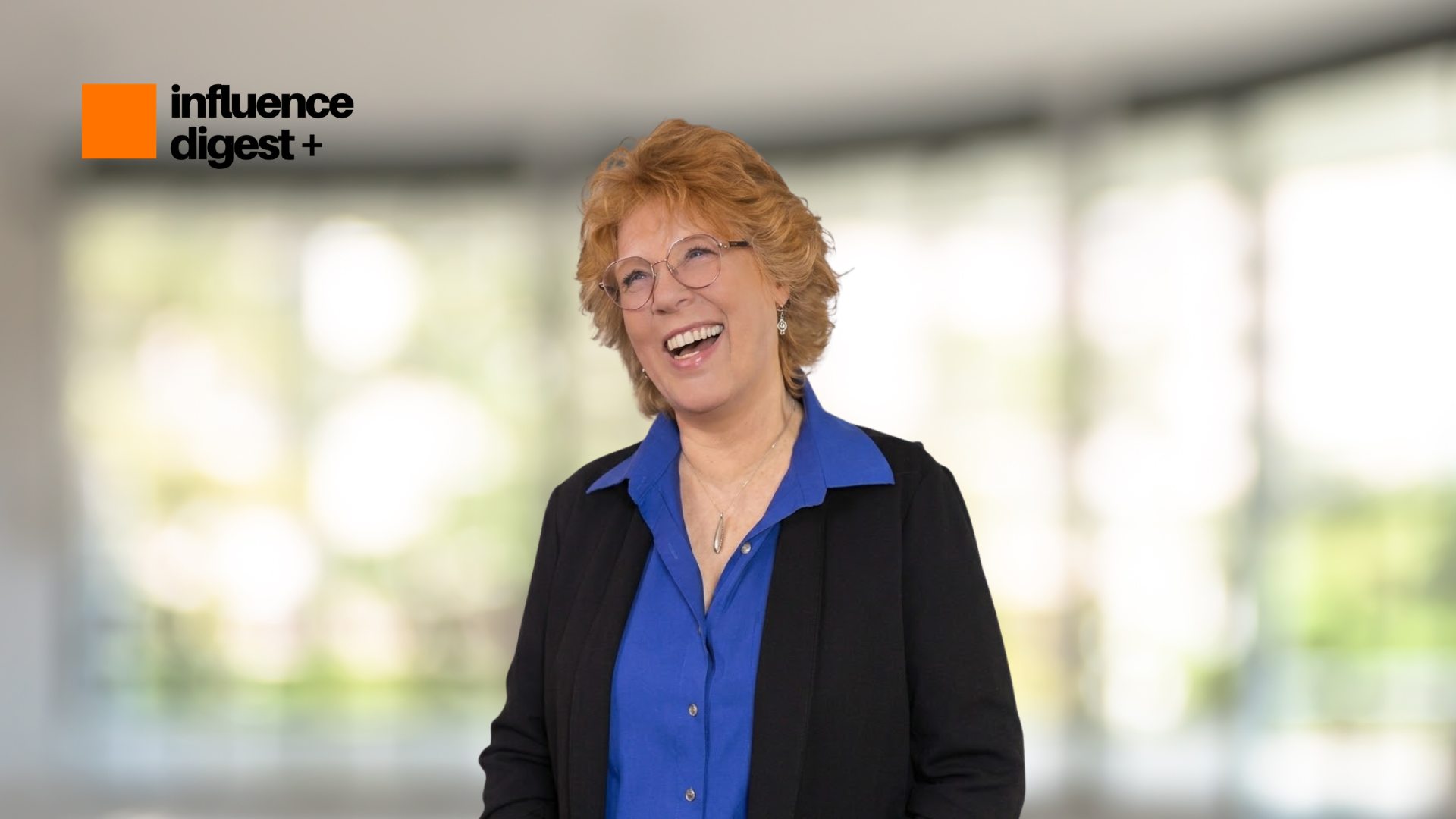
Interview: Coach Cora — Your Leadership Is Showing
Why the Culture You Create Determines the Results You Get
Leadership is always visible. It shows up in how decisions get made, whether people speak up, how conflict is handled, what behavior is rewarded or tolerated, how customers are treated, and whether people are becoming more capable or more dependent. For Coach Cora Lonning, that observation has become both a philosophy and a challenge: “Your leadership is showing.” Across more than 25 years in organizational development, leadership development, talent optimization, change management, coaching, and consulting, she has seen one truth play out repeatedly: leaders create conditions, those conditions shape behavior, repeated behavior becomes culture, and culture shapes how work gets done, how customers experience the organization, and ultimately how the business performs.
The Origin Story: Learning Early That Environment Shapes What Is Possible
Coach Cora’s inspiration began long before she ever used the word “coach.” Her father worked in youth development for the State of Oregon, where she watched him challenge a system that was often punitive and instead create environments where young people had a better chance to grow. The success of that work eventually led him into youth development efforts at the national level, carrying forward the same belief: when you change the environment around people, you can change what becomes possible for them.
That lesson stayed with her. “If you want different outcomes from people, you have to create the conditions that allow different outcomes to happen.” Long before she had words like organizational development, culture, or leadership systems for it, she was learning that people respond to the environments leaders create.
That belief now anchors her coaching philosophy. Her work is grounded in development, not dependency. “The leader’s job is not to become indispensable — it is to facilitate capability.” For Cora, the measure of a leader is not how dependent the team becomes on them, but how capable the team becomes without them.
Great leadership, in her view, builds confidence, judgment, skill, and ownership in others. Sometimes that requires direction. Sometimes support. Sometimes challenge. And sometimes the most important thing a leader can do is create space and access for others to think, decide, and lead.
A Career Shaped by Systems Thinking, Talent Strategy, and a Challenge to Conventional Wisdom
Cora’s career has always centered on people, performance, and the environments in which people are expected to succeed. Over more than 25 years, she has worked across organizational development, leadership development, talent optimization, change management, coaching, and consulting. She also spent 11 years as an adjunct college professor teaching business, leadership, communication, adult learning, and conflict.
Those experiences reinforced a principle that continues to shape her work: people rarely struggle because they simply do not care. More often, there is a gap in clarity, skill, communication, support, alignment, or leadership.
That systems perspective is also why she challenges one of the most familiar lines in leadership conversations: “People leave managers, not organizations.” People leave for many reasons, she points out, and many of them are positive. When someone leaves because of a negative experience, she rarely sees it as the failure of one person alone. She sees it as information about the system.
Her learned philosophy is direct: “When performance or culture breaks down, I don’t start by asking who failed. I ask what in the system failed to equip, support, develop, or hold people accountable.”
Was poor behavior tolerated because the numbers looked good? Were standards of behavior clear? Were leaders developed for the responsibilities they were given? Were employees expected to perform without the knowledge, skills, or tools required to succeed? These are the questions that move an organization beyond blame and toward root cause.
That is where organizational development and leadership development intersect — and where Cora believes talent strategy becomes critical. She defines talent strategy as the alignment of organizational development, leadership development, business strategy, and the systems that support all three. In practical terms, it connects what the organization wants to accomplish with what its people must know, do, and become in order to accomplish it.
Her work today is increasingly focused on helping organizations strengthen that entire ecosystem rather than simply swapping out individuals while leaving the same conditions in place.
Coaching Methodology: Development Must Lead to Observable Change
Cora’s coaching and consulting work begins with clarity: what needs to be different, and what does success look like for the individual, the leader, the team, and the organization?
From there, she looks at both the person and the environment around them. Coaching may involve self-awareness, communication, decision-making, conflict, accountability, leadership capability, or performance. But coaching does not happen in a vacuum. Every individual is operating inside a system with expectations, norms, incentives, pressures, and constraints.
Assessment tools can create insight, but Cora is clear that insight alone does not create transformation. The real work is helping people understand how their patterns show up, how others experience them, and what they need to do differently.
She also spends significant time helping leaders distinguish between direction, support, challenge, and autonomy. Not every employee needs the same thing from a leader. Effective leadership requires knowing when to step in, when to coach, when to challenge, and when to step back.
That philosophy also connects to her book TRAPPED, which challenges the dysfunctional belief that success at work is entirely someone else’s responsibility — especially the belief that “my leader is the problem, so there is nothing I can do.” Leadership absolutely matters, she says, but healthy working relationships are mutual. Leaders have a responsibility to create clarity, support growth, and build capability. Employees also have a responsibility to communicate, ask for what they need, take ownership of their development, and participate in the relationship.
Most importantly, her coaching is designed to connect to the real world. Sessions focus on actual conversations, real relationships, real performance challenges, and real business priorities. “I want a client to leave a coaching session and be able to apply what we discussed that same day.”
And the work does not end when the session or workshop ends. Meaningful change requires practice, reinforcement, feedback, reflection, and accountability over time. The goal is not simply for someone to know more about leadership. It is for their leadership to show up differently — and for the people and systems around them to be stronger because of it.
Why Coaches and Consultants Who Stop Learning Fall Behind
For Cora, ongoing learning is essential because people, organizations, and the environments they operate in are constantly changing. A consultant needs to stay current on theory, research, organizational behavior, leadership practices, and the realities shaping the workplace. Otherwise, she says, “we risk bringing yesterday’s answers to today’s problems.”
But there is another layer she believes matters even more. “Good consultants continue to learn about the field. Great consultants commit to learning about you and your organization.”
That means learning the business, the strategy, the culture, the people, the pressures, and the context in which decisions are being made. It also means resisting the temptation to arrive with a prepackaged answer simply because it worked somewhere else.
The same is true in a coaching conversation. A coach should bring frameworks, experience, perspective, and skill, but coaching is not about proving how much the coach knows. It is about understanding the person in front of you well enough to help them think more clearly, build capability, and move forward in a way that fits their role and their environment.
Cora draws an equally firm line around organizational development consulting. “True organizational development professionals do not walk in assuming they already have the answer or carrying a silver bullet. They walk in with questions that help uncover root causes, surface patterns, and reveal a functional path forward.”
Her standard is deliberately forward-looking: “Our job is not to create tomorrow’s problem with today’s solution.” Instead, the work is to understand today’s challenges deeply enough to help leaders solve what is in front of them while also strengthening the organization’s ability to anticipate and prevent what may come next.
That, in her view, is the difference between applying knowledge and creating lasting value.
Final Insight: Your Leadership Is Showing — What Is It Creating?
Cora closes with the idea that sits at the center of her work: pay attention to what your leadership is creating.
Leadership is showing every day, whether a leader intends it to or not. It shows in how decisions get made, whether people speak up, how conflict is handled, what behavior gets tolerated, how customers are treated, and whether people are becoming more capable or more dependent.
Organizations often try to fix culture through a new values statement, another engagement survey, another training program, or another leadership retreat. Those efforts can help, but culture is not created by a poster on the wall. Culture is built through repeated behavior.
What gets reinforced becomes normal. What gets tolerated becomes acceptable. What gets modeled gets copied. What gets ignored eventually becomes part of the culture.
That is why Cora does not see leadership development as simply a people initiative. She sees it as a business strategy. Culture shapes how quickly decisions get made, how well teams collaborate, how employees respond to change, how customers experience the organization, and how effectively the organization executes its strategy.
A strategic plan without the talent strategy to support it is simply aspiration. Organizations grow when their people grow, and people grow when leaders create the conditions for them to succeed.
So if leaders want different results, Cora believes they must look closely at the environment their leadership is creating.
“Your leadership is showing. The real question is: what is it creating?”
Better Leaders. Stronger Teams. Healthier Cultures.
Growing organizations through developing people. To learn more, visit coachcora.com, connect with her on linkedIn, or listen to the latest episode of her podcast, The People Playbook.


